How Community Engagement, Heritage Storytelling and Strategic Communications Helped Transform a Disruptive Infrastructure Project
If someone had told me during my Bachelor of Management (Marketing) that one day I would be promoting a 100-year-old sewer rehabilitation project, I probably would have laughed. Like many people, I associated marketing and communications with products, brands and campaigns. I certainly didn’t imagine that some of the most rewarding communications work of my career would involve underground infrastructure. Yet infrastructure is one of the most important stories we rarely tell.
The roads we drive on, the water we drink, the energy that powers our homes, and the sewer systems operating beneath our streets are often invisible until something goes wrong. One project that fundamentally changed my perspective was Melbourne Water’s Williamstown Main Sewer Rehabilitation Project. What began as a challenging infrastructure project quickly became an exercise in community engagement, heritage storytelling and building trust.
The Project
Between 2017 and 2018, CPB Contractors and Abergeldie Complex Infrastructure were engaged by Melbourne Water to deliver rehabilitation works on the Williamstown Main Sewer. The sewer, originally constructed in 1906, services thousands of residential and industrial properties throughout Williamstown, Newport and Spotswood. More than a century after its construction, the asset required significant rehabilitation to ensure it could continue providing reliable sewerage services for decades to come.
As Community Engagement Lead, my role included:
• Stakeholder identification and analysis
• Communications planning and delivery
• Community and business engagement
• Issue and complaint management
• Social impact mitigation
• Risk identification and management
• Stakeholder relationship management
• Project communications and campaign development
Like many infrastructure projects, the challenge was not simply delivering the works. It was helping people understand why they mattered.
The Challenge
One of the most significant construction phases involved the occupation of a busy section of Ferguson Street in Williamstown. The works created unavoidable impacts for businesses, residents, visitors and road users. Construction activities, traffic management, access changes and the visible presence of works all had the potential to generate frustration and concern.
The reality is simple: no community wakes up excited about sewer rehabilitation works. Most people never think about wastewater infrastructure until something stops working. The challenge was finding a way to make the project relevant, meaningful and interesting to the people affected by it.
Finding the Story
Rather than focusing solely on construction activities and technical information, we asked a different question:
“How do we connect the community to the project’s rationale?” The answer was hidden beneath my feet; the Williamstown Main Sewer had been operating since 1906. It had quietly supported generations of residents, businesses and industry without most people ever knowing it existed.
I thought, “What if we told that story?” and what if we used the project as an opportunity to celebrate Williamstown’s rich history while explaining why the upgrade was necessary? My simple idea became the foundation of the campaign, as Williamstown residents are extremely proud of their heritage.
Turning Construction into Community Storytelling
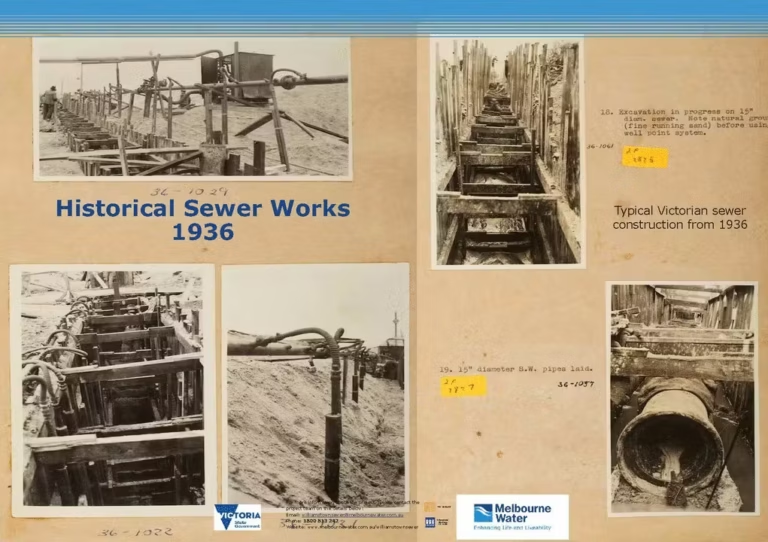
Working closely with Melbourne Water’s History and Heritage lead, I researched and found historical photographs and archival material to help tell the story of Williamstown’s past. Rather than presenting the project as simply another construction site, we created a series of heritage-themed campaign materials that connected the sewer upgrade with the community’s broader history.
The campaign explored:
• Historical sewer construction methods
• Williamstown’s role as Melbourne’s original port
• Historical streetscapes and local landmarks
• Williamstown ferries and maritime history
• Local sporting history
• Community heritage and identity
Large-format project boards were installed throughout the work area, transforming construction hoardings into community information displays. The campaign encouraged people to stop, read, reflect and learn something new about the suburb they called home. What could have been viewed purely as disruption became an opportunity for engagement.
Did You Know?
The campaign included a series of historical facts designed to spark curiosity and conversation.
Some examples included:
- Did you know that since 1906, the Williamstown Main Sewer has transferred wastewater from thousands of homes and businesses across Williamstown, Newport and Spotswood?
- Did you know that Williamstown was once Melbourne’s primary port?
- Did you know that Williamstown’s first pier was built in 1836 and was used to transport passengers to Melbourne by ferry?
- Did you know that Williamstown Football Club was established in 1864 and remains one of Australia’s oldest football clubs?
- Did you know that many sections of Victoria’s underground infrastructure are now more than 100 years old and require ongoing investment to maintain reliable services?
These simple pieces of information created conversations that extended well beyond the project itself.
Stakeholders Beyond Residents
One of the most important lessons from infrastructure projects is that stakeholders are rarely limited to nearby residents. The Williamstown Main Sewer Rehabilitation Project involved engagement with a broad range of stakeholder groups, including:
• Melbourne Water
• Hobsons Bay City Council
• Local businesses and traders
• Ferguson Street Chamber of Commerce
• Residents and property owners
• Emergency services
• Public transport operators
• Media
• State Government representatives
• Construction contractors and project teams
Each group had different interests, concerns and expectations.
Effective stakeholder engagement required understanding these perspectives and maintaining consistent communication throughout project delivery.
Building Trust Through Visibility
One of the guiding principles throughout the project was simple: No surprises.
The team maintained a strong presence throughout the project and worked proactively to communicate upcoming activities, respond to concerns, and provide progress updates.
Community trust is rarely built through a single communication.
It is built through consistent actions over time.
Showing up, listening, responding, and following through on commitments often matter more than any brochure, newsletter, or project update.
Key Achievements
- Developed and delivered stakeholder and community engagement activities for the Williamstown Main Sewer Rehabilitation Project.
- Managed communications associated with construction activities, traffic impacts and Ferguson Street occupation works.
- Prepared and distributed project updates, construction notifications, community information materials and stakeholder correspondence.
- Supported engagement with residents, businesses, local government representatives and community stakeholders throughout project delivery.
- Developed a place-based heritage storytelling campaign that incorporated Williamstown’s local history into construction hoardings and project communications.
- Researched, curated and presented historical content to create an engaging community information experience during construction.
- Enhanced community understanding of project objectives, progress and impacts through clear, accessible communications.
- Contributed to maintaining positive stakeholder relationships and community trust during a complex infrastructure rehabilitation project.
- Demonstrated how infrastructure communications can deliver broader community value through education, heritage interpretation and local storytelling.
- Supported Melbourne Water’s commitment to transparency, community engagement and customer-focused project delivery.
Lessons Learned
Looking back, the Williamstown Main Sewer Rehabilitation Project reinforced several important lessons.
Infrastructure needs storytelling.
People connect with stories far more readily than with technical specifications. Communities care about more than project impacts. They care about place, identity, history and belonging.
Transparency reduces conflict.
When people understand why a project is happening and how it affects them, they are more likely to engage constructively.
Relationships matter. Strong stakeholder relationships often determine how successfully challenges can be navigated when issues arise. Community engagement is not about selling projects, and it is about helping people understand them.
Project Outcomes
The campaign generated positive community conversations and helped shift attention away from construction disruption toward the broader value of the project.
The historical storytelling approach created interest, encouraged engagement, and strengthened the community’s understanding of why the works were necessary.
The project ultimately received commendations from Hobsons Bay City Council and the Williamstown Chamber of Commerce for the creative, ethical and timely delivery of the campaign. More importantly, it demonstrated how infrastructure communications can move beyond project notices and construction updates to create meaningful connections with the communities they serve.
Final Thoughts
The Williamstown Main Sewer Rehabilitation Project taught me that community engagement is rarely about construction; it is about people and about understanding what communities value, recognising local identity and creating conversations that help people understand why projects matter.
Sometimes the most effective communications campaigns are not about promoting the project itself; they are about helping people see the story behind it.
In Williamstown, that story began with a 100-year-old sewer and ended with a community reconnecting with its own history.
Project Team Acknowledgement
This project was delivered by CPB Contractors and Abergeldie Complex Infrastructure in partnership with Melbourne Water.
Special acknowledgement to Adrian Kohlman, Mohish Waitha, Matthew Walsh, Adam Maher and Herald Tshwanelo, whose contributions helped support successful project delivery between 2017 and 2018.
Historical imagery was sourced through Melbourne Water’s History and Heritage Program.
Campaign concept, stakeholder engagement and communications delivery by Tarnia Riggs.
-Industry commentary and project reflections written by Tarnia Riggs.
#InfrastructureCommunications, #CommunityEngagement, #StakeholderEngagement, #StrategicCommunications, #MelbourneWater, #Williamstown, #ProjectCommunications, #HeritageStorytelling, #SocialLicence, #CommunityConsultation, #InfrastructureProjects, #CommunityRelations, #SocialImpact, #ProjectCaseStudy, #TarniaRiggs